We gave 11 AI agents a job, a budget and a boss: how AI agents actually work
An AI agent is a model in a loop with tools, memory and limits. Here is how the Prodigal AI Colony's eleven agents are set up, what each part does, and what we learnt about keeping them useful and safe.
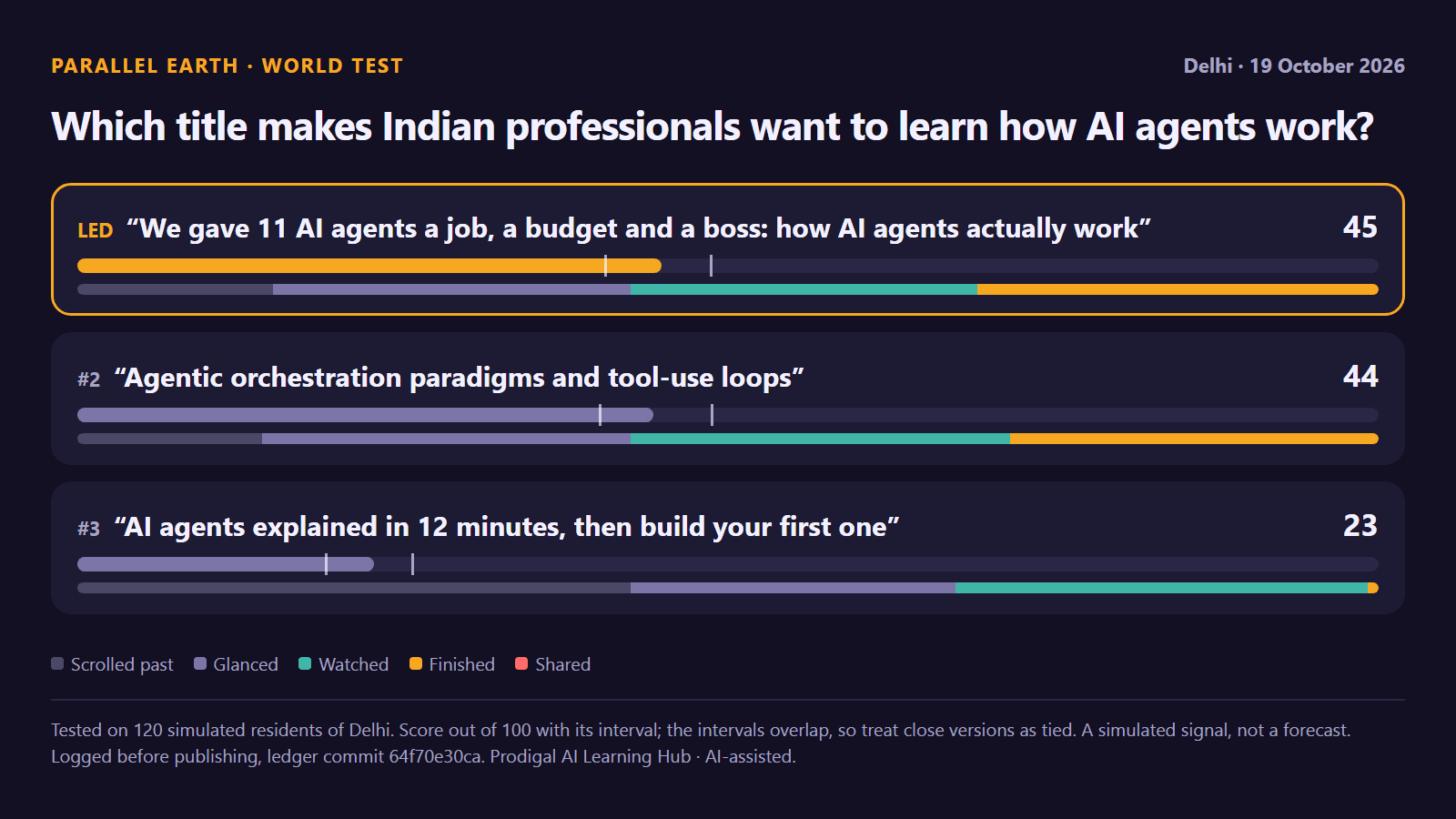
"AI agent" gets used for everything from a chatbot to a robot. The useful definition is smaller: an agent is a language model running in a loop, where each turn it can call a tool, read the result and decide what to do next, until the task is done or it hits a limit. We run eleven of them in the Prodigal AI Colony, a content house where agents do the work and a person approves every outside action. Here is what each part does.
1. A role: what the agent is for
Each agent has a written role. Our colony has a chief executive, a researcher, a scriptwriter, a voice, an editor, a sound librarian, compliance, a publisher, an analyst, a studio desk and a bank. A role is a few paragraphs: what good work looks like, what to hand on and to whom. Narrow roles beat clever prompts: an agent that knows it is the editor stops trying to be the researcher.
2. Tools: what it can touch
A model alone can only write text. Tools let it act: read a web page, save a draft, check YouTube numbers, run a test in our simulated India. Every tool has a schema, and every role gets only the tools its job needs. The scriptwriter can draft; it cannot upload. The publisher can upload; it cannot spend.
3. Limits: a budget and a boss
- Budgets. Each agent has a monthly cap on model spend; the bank agent reports against it.
- A policy gate. Publishing, spending, deploying and hiring go to the board for a yes. Agents never send messages to people outside: they draft, and a person sends.
- Quiet hours. Nothing publishes between 9 pm and 8 am India time.
- A word guard. Drafts with forbidden words or styles are stopped before they reach the board.
4. Memory and lessons
Agents forget between runs unless you give them a place to remember. Ours keep a short memory of finished tasks, and a lessons library: when an agent hits a problem and finds the fix, it records one plain sentence, and that lesson is added to its role the next time it runs. The board can retire lessons that turn out wrong.
5. Three rules before handing anything on
01Inventory your inputs
List every source you used before you start writing about it.
02Trace every figure
Every number points to where it came from, with a date.
03Reopen and verify
Open your own output again and check it against the inputs before you send it.
Frequently asked questions
What is an AI agent?
A language model running in a loop that can call tools, read the results and decide its next step until a task is done or it reaches a limit.
How do you keep AI agents safe?
Narrow roles, only the tools each role needs, spending caps, and a person approving every publish, spend and deploy.