Blog
Practical writing on brand audits, engagement benchmarks, AI content that actually converts, and how to turn attention into pipeline.

Client Work Overload: How Agencies and Service Businesses Can Reduce Delivery Bottlenecks With AI
For many agencies, consultancies and service businesses, growth creates a strange problem.
ReadWhy Marketing Teams Are Overwhelmed—and How AI Can Make It Better or Worse
Yet talk to almost any modern marketing team and a different picture often emerges.
ReadAI Campaign Execution: How AI Agents Move Marketing From Strategy to Action
It is also where AI agents could create some of the largest operational changes in marketing.
Read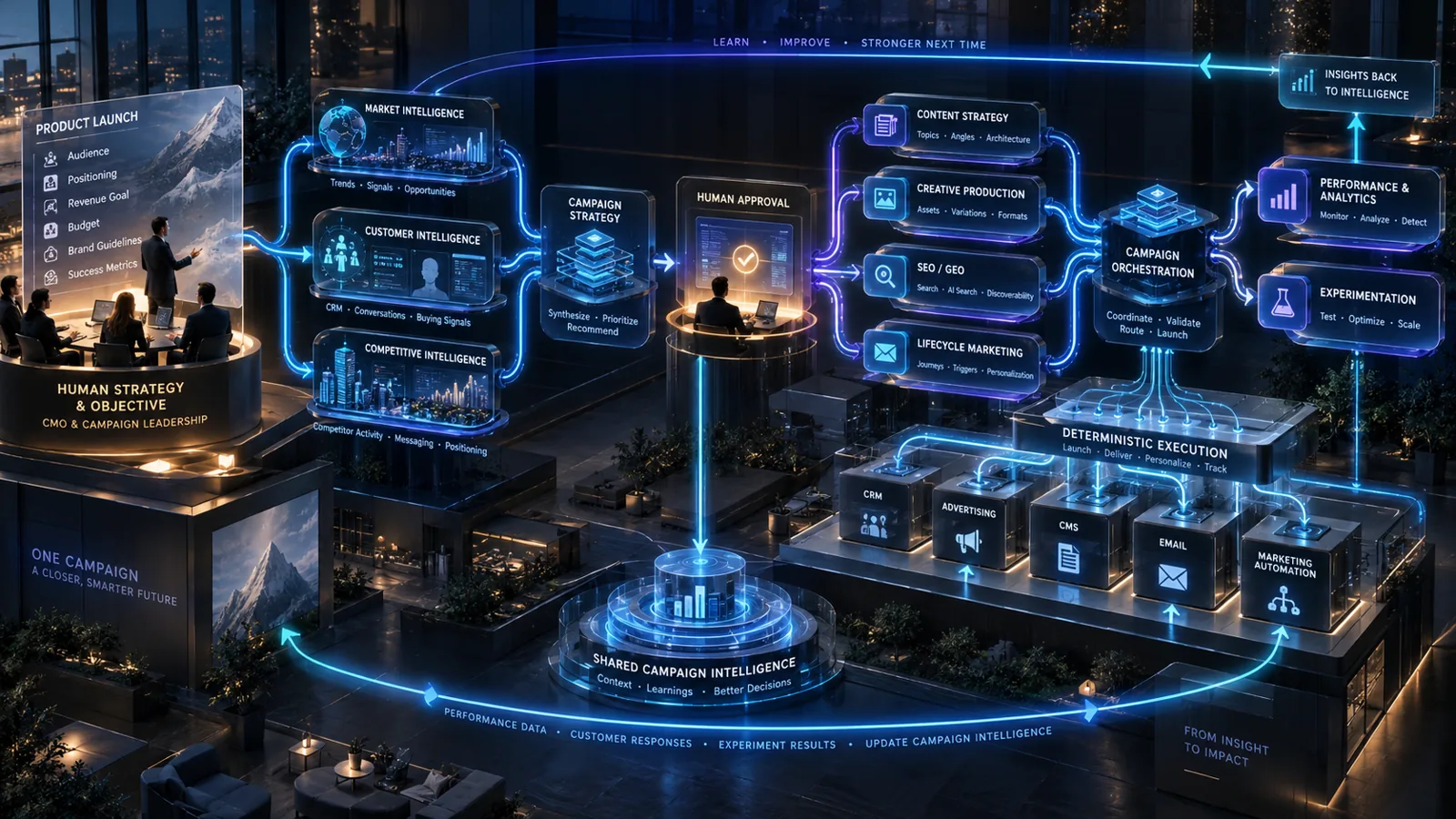
One Campaign, Multiple Agents: How Multi-Agent Marketing Workflows Actually Work
Instead of using one general-purpose assistant for every part of a campaign, an organization can assign different responsibilities to specialized agents and let them coordinate through an…
Read
Marketing Decision Intelligence: How AI Is Turning Marketing Data Into Better Decisions
Marketing Decision Intelligence: How AI Is Turning Marketing Data Into Better Decisions
Read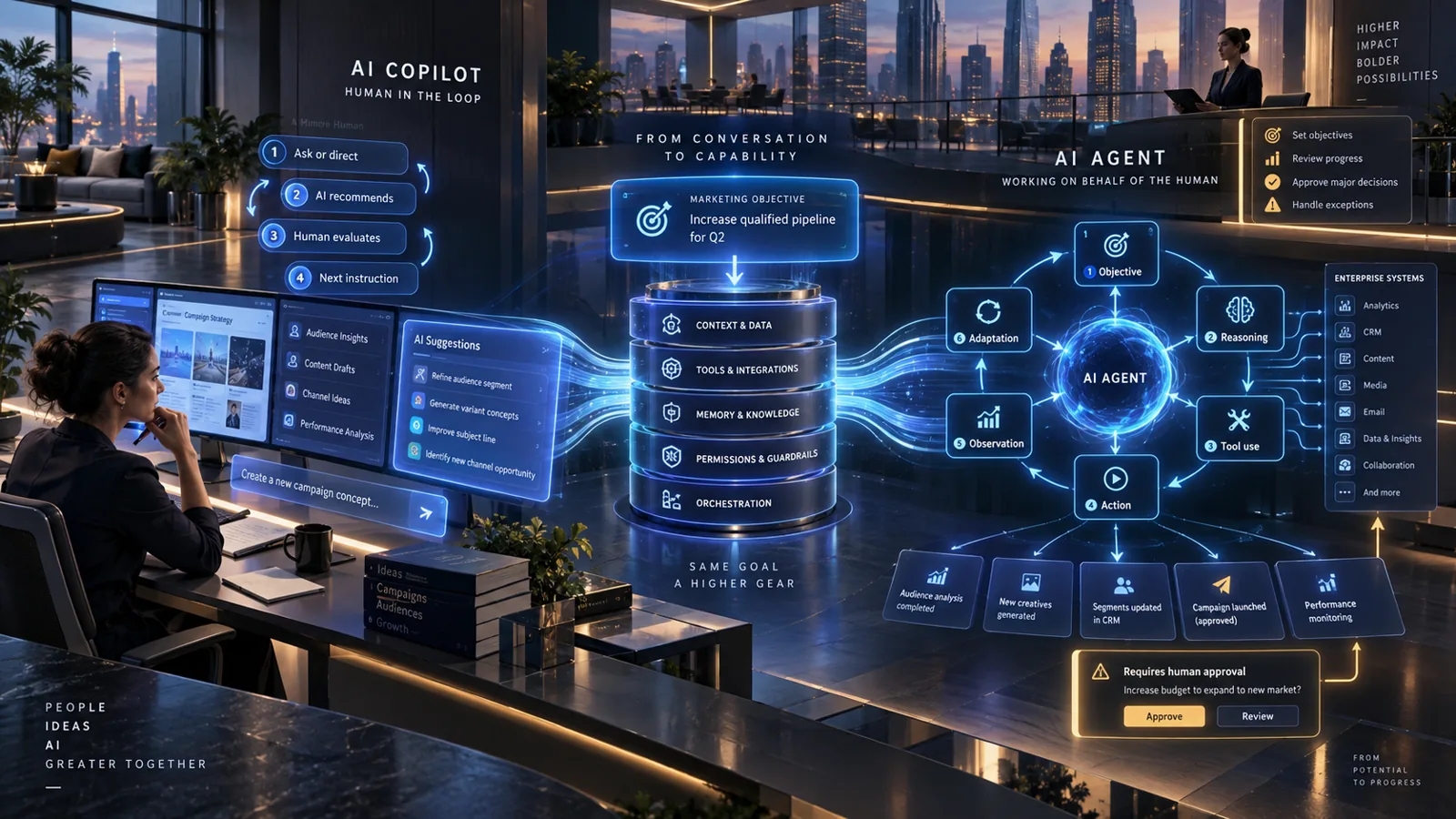
AI Copilots vs AI Agents: What’s the Difference—and When Should Marketers Use Each?
Agents are being positioned as systems that can research, use tools, perform multi-step work, interact with business systems and sometimes operate with significant independence.
Read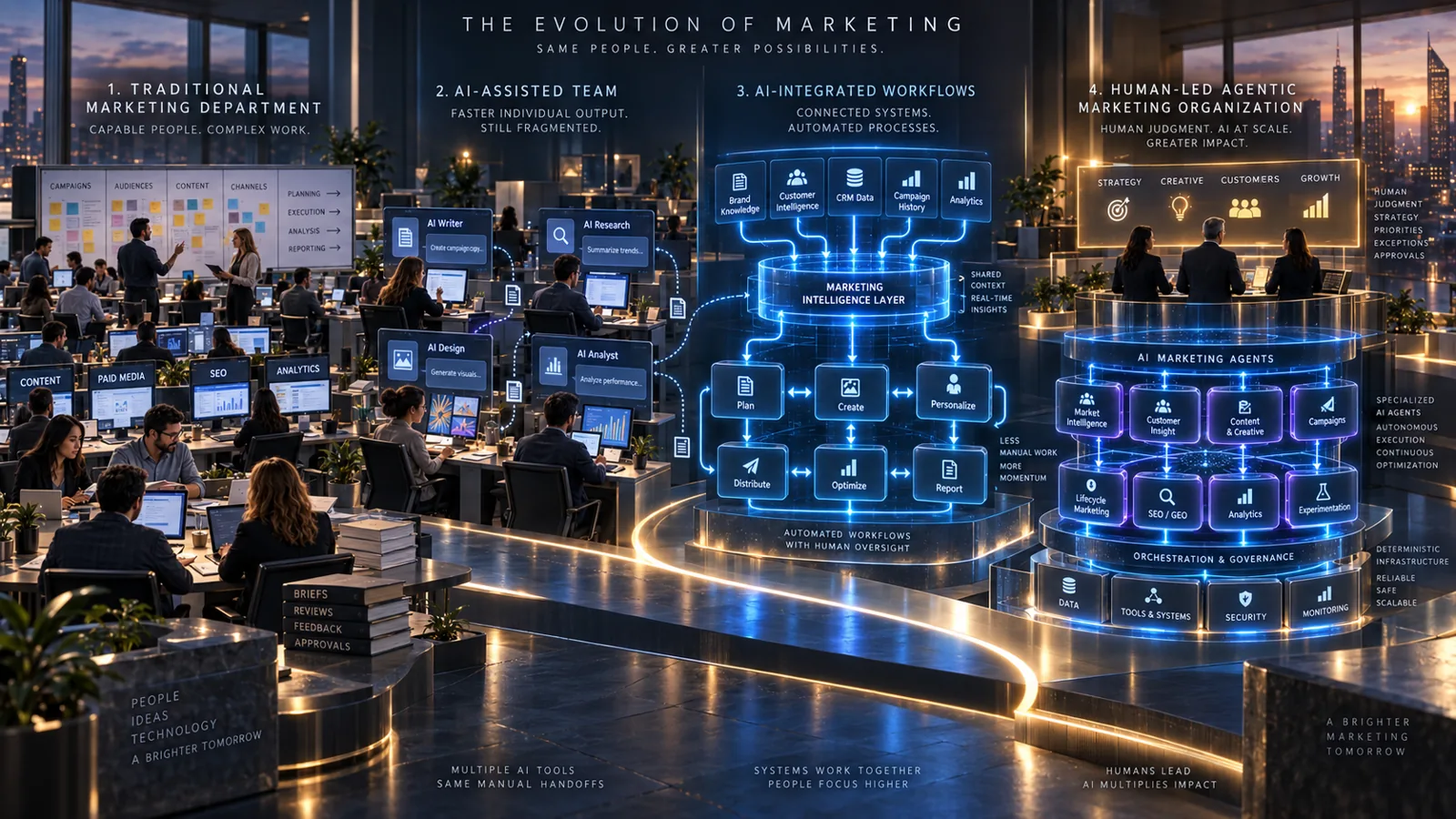
Marketing Team Transformation: How AI Is Redesigning the Modern Marketing Organization
Instead of simply creating another marketing function, AI can operate across many existing ones.
Read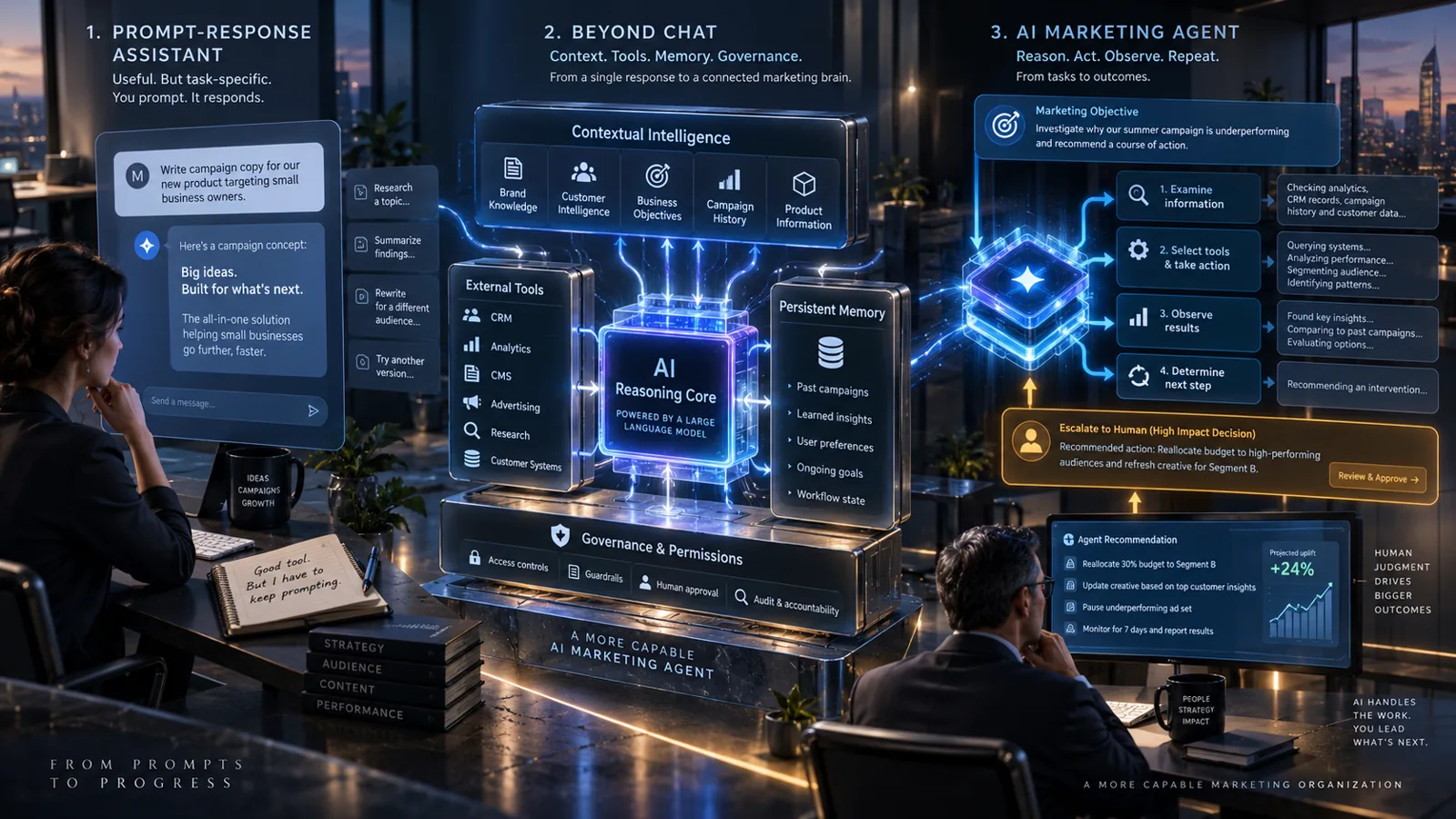
What Are AI Marketing Agents? A Complete Guide to How They Work, What They Do, and Why They Matter
And it is not simply an automated workflow with AI-generated copy inserted into it.
Read
By 2027, the Best Marketing Teams Won’t Be Larger. They’ll Be More Agentic.
For most of the last twenty years, growing marketing capability meant growing the marketing organization.
ReadMeet the AI Marketing Team: 10 AI Agents, 10 Jobs, One Human-Led System
What if some marketing responsibilities could be represented as persistent AI capabilities that operate continuously across the organization?
Read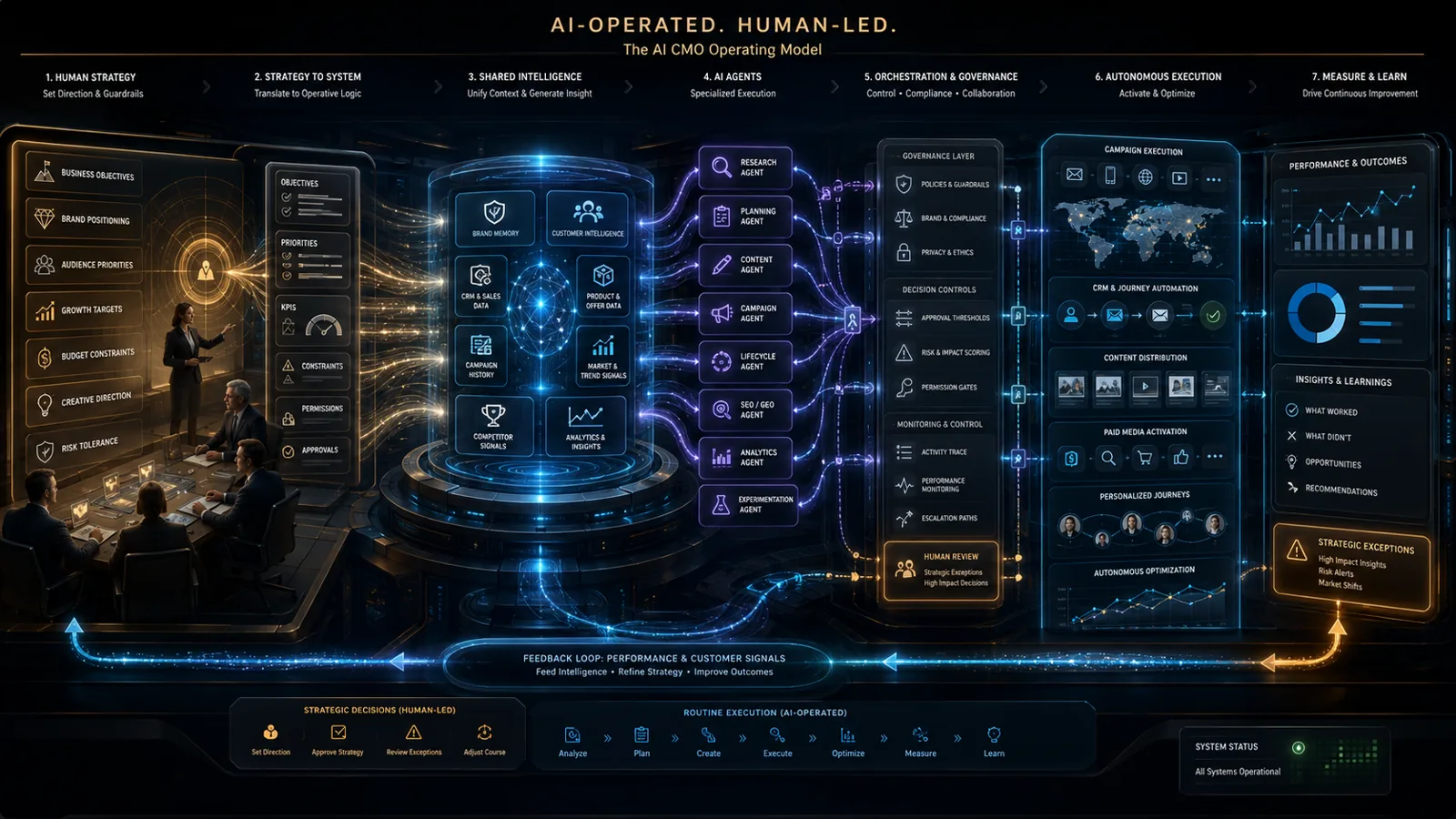
The AI CMO Operating Model: From Strategy to Autonomous Execution
How should all of that capability actually operate inside a marketing organization?
Read
Your Marketing Team Doesn’t Need More AI Tools. It Needs Fewer Workflows.
A fragmented marketing process does not become efficient simply because artificial intelligence is inserted into every step.
Read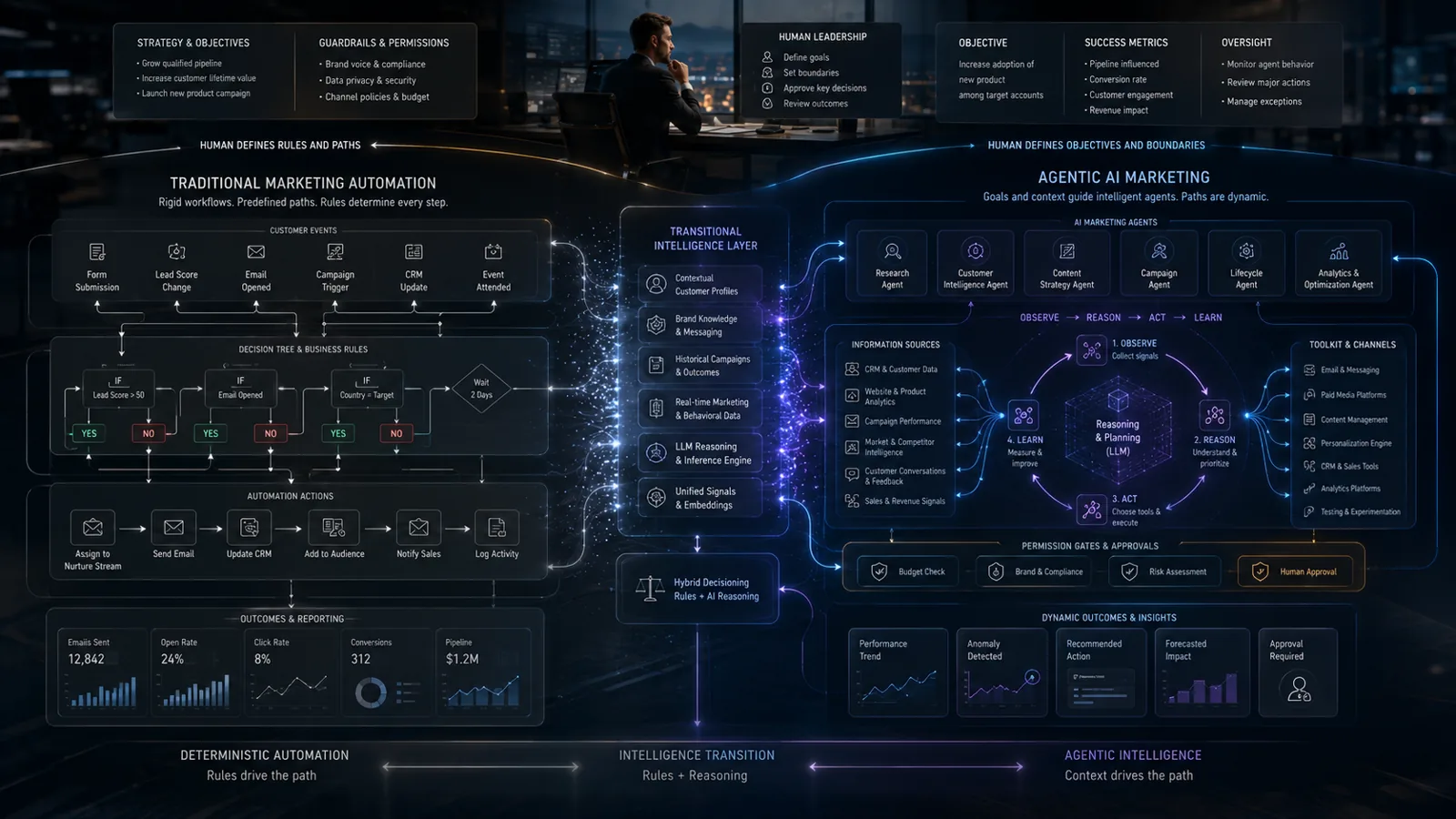
AI Marketing Agents vs Marketing Automation: What's Actually Different in 2026?
So when the technology industry says that AI agents will transform marketing, a reasonable question follows:
Read
The 5-Layer AI CMO Stack: How to Build an AI-Powered Marketing Operating System
Soon, the marketing team has more AI tools—but not necessarily more intelligence.
Read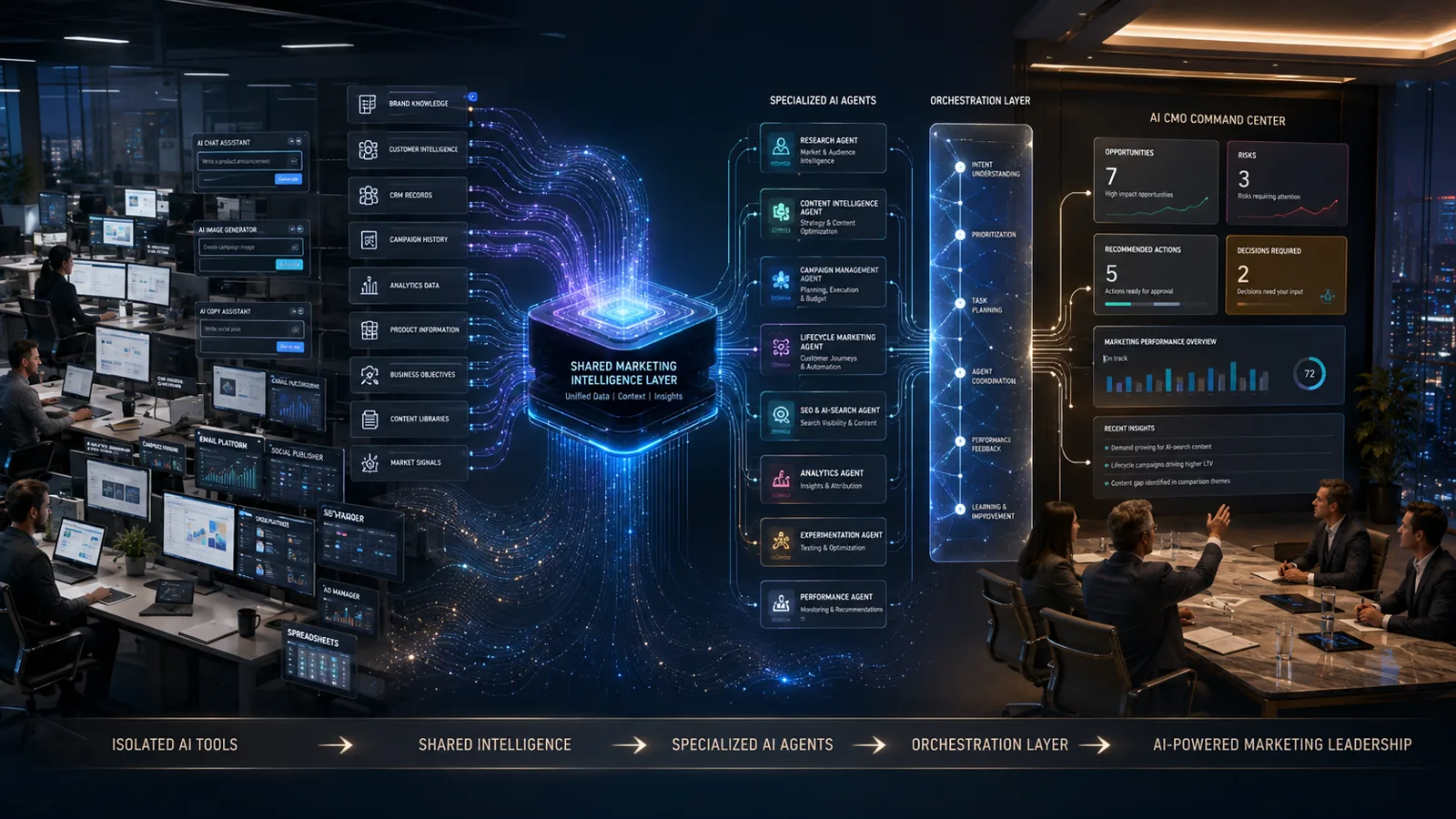
What Is an AI CMO? The Complete Guide to AI-Powered Marketing Leadership in 2026
Marketing has spent the last several years adding artificial intelligence to individual tasks.
Read
The 10 Biggest AI Marketing Shifts: From Content Generation to Autonomous Growth
Artificial intelligence is moving from a tool inside marketing work towards an operating layer across marketing.
Read
Introducing the Future of Marketing: Human Strategy, AI Agents and Continuous Growth
For the past several years, the marketing industry has discussed artificial intelligence mainly as a tool.
Read
10 Predictions for Marketing in 2030: AI Agents, Machine Customers and the End of Campaign-Led Growth
Predicting the future of marketing is difficult because the visible technology often changes faster than the underlying business problems.
Read
Lessons From Building Prodigal AI: Why Human-Like AI Content Is a Business Problem, Not Just a Model Problem
Artificial intelligence could generate articles, social posts, scripts, campaign ideas and marketing assets faster than a traditional team.
Read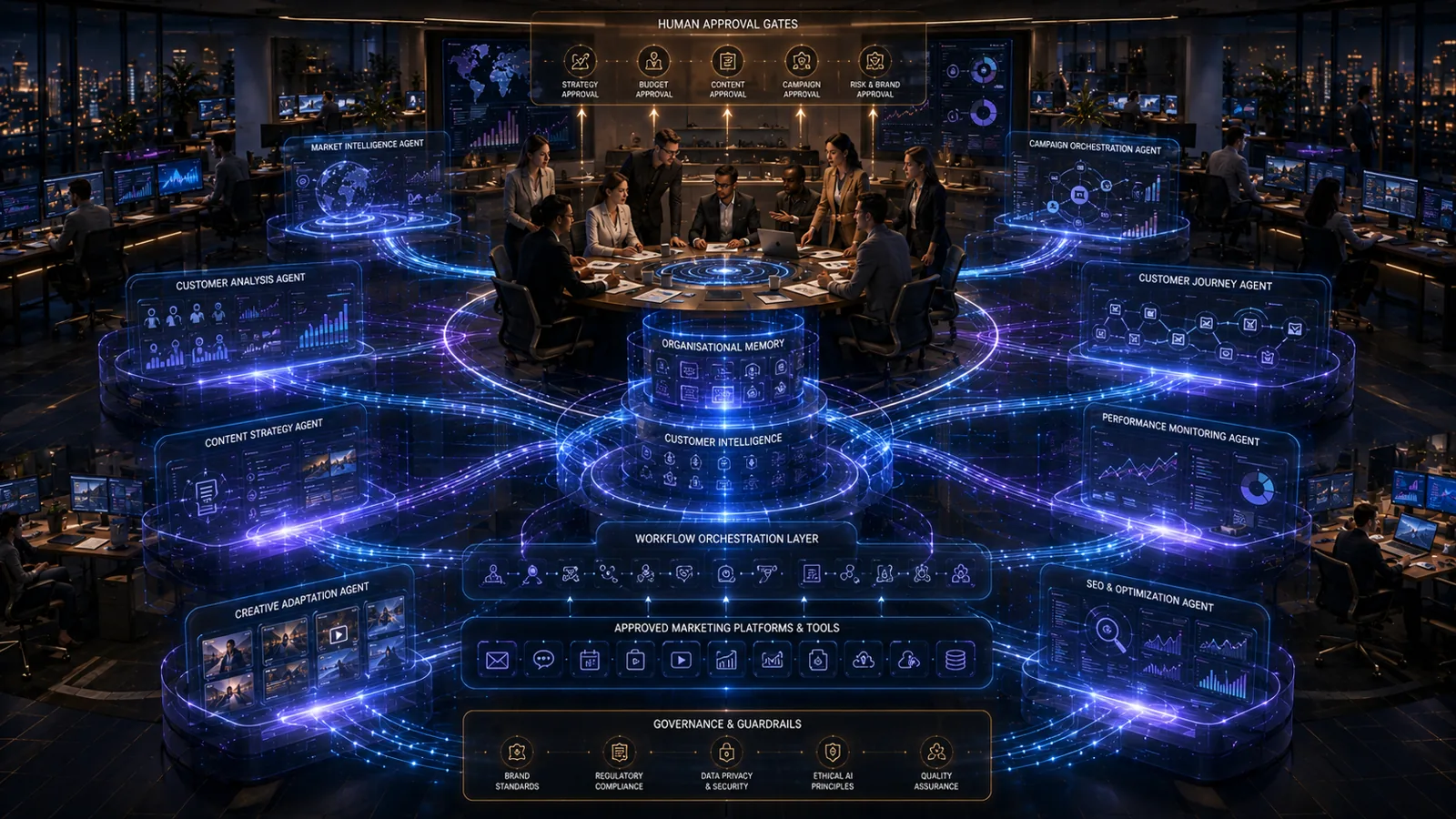
The Rise of Autonomous Marketing Teams: How Humans and AI Agents Will Work Together
If campaigns became more complex, it hired campaign managers, analysts and marketing-operations specialists.
Read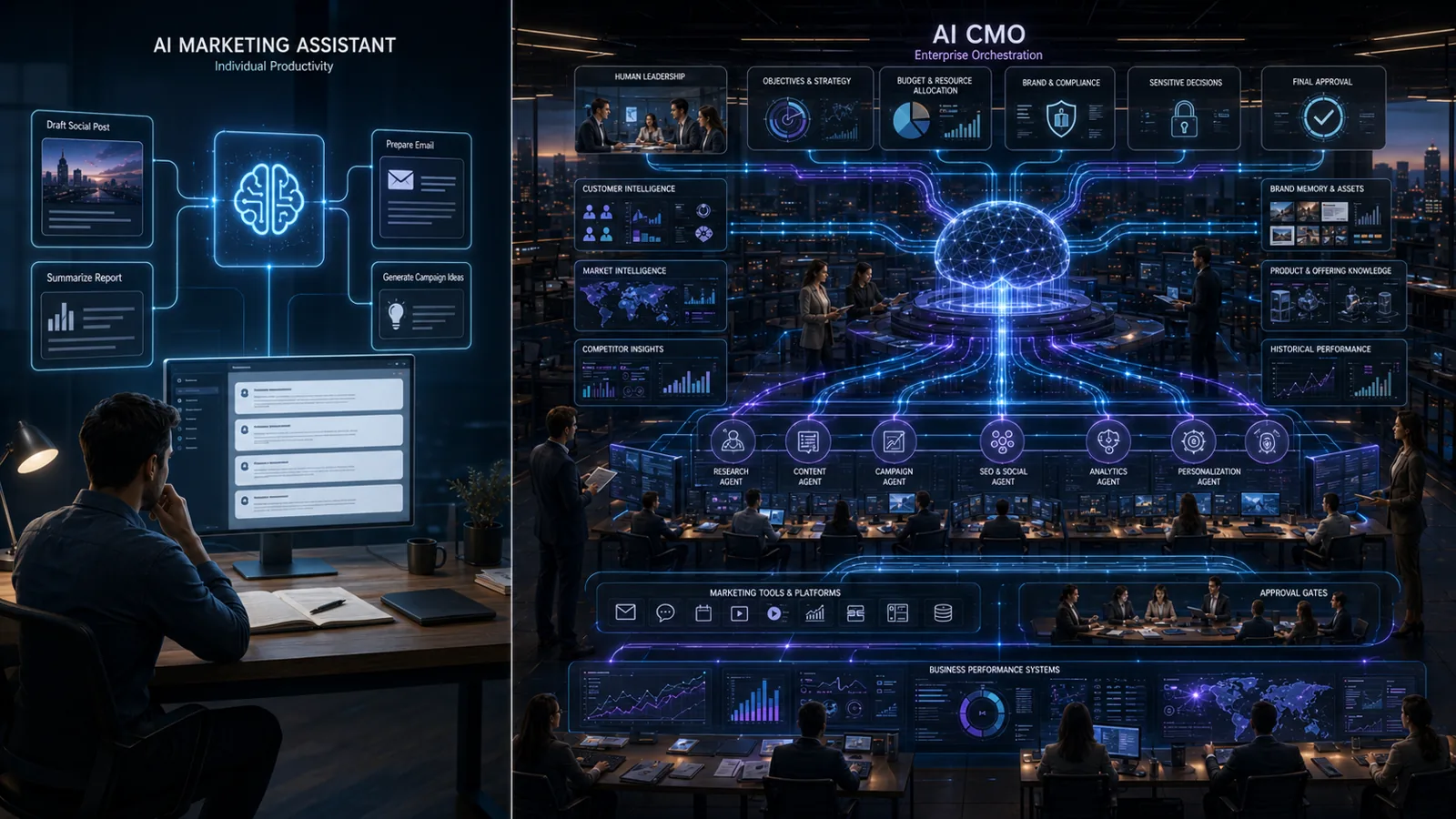
AI CMO vs AI Assistant: The Difference Between Helping With Marketing and Running the Marketing System
It may discover that the real objective is not to publish more LinkedIn content. The company needs to address a recurring enterprise objection about implementation risk.
Read
The End of Marketing Dashboards: Why AI Decision Systems Will Replace Passive Reporting
Instead, many marketing leaders begin their week by opening a collection of dashboards.
Read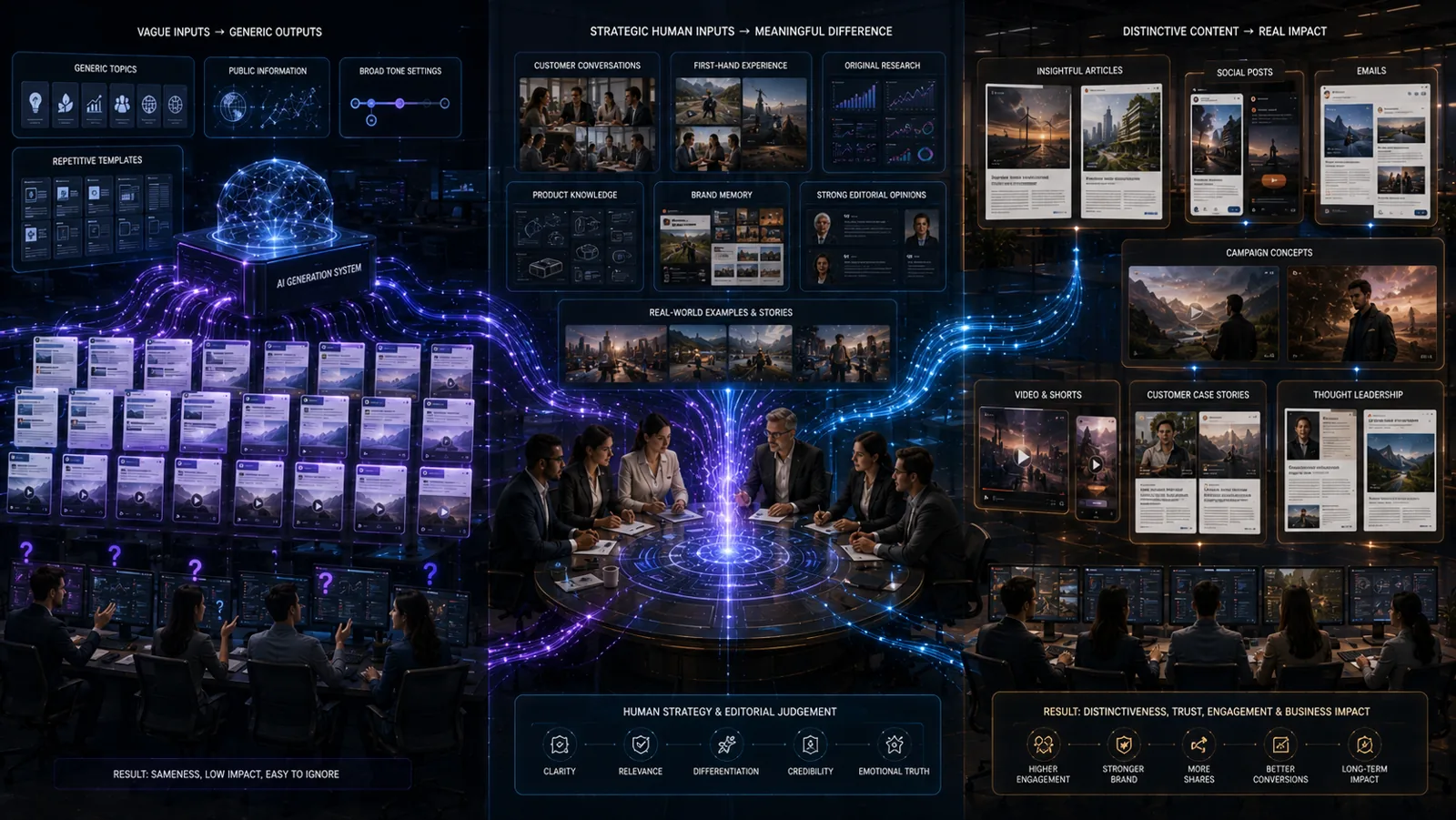
Why AI-Generated Content Still Sounds Like AI—and How to Make It Sound Human
You can often recognise AI-generated content before anyone tells you how it was created.
Read
AI Doesn’t Create Strategy—It Executes Strategy at Machine Speed
AI can generate strategic options. Humans must choose the strategy. AI’s greatest value begins after that choice has been made.
Read
Five Marketing Workflows AI Should Own—and Five Decisions Humans Must Keep
The work is important, but much of it is repetitive, fragmented and dependent on people moving information manually between systems.
Read
How an AI CMO Thinks Before Creating Content: The Intelligence Behind Every Campaign
Ask a typical generative AI tool to create content, and it begins writing almost immediately.
Read
The Marketing Operating System of the Future: How Humans, Data and AI Agents Will Work as One
Content is scattered across document folders, project-management tools and content-management systems.
Read
Marketing Is Becoming Autonomous: How AI Agents Will Run Continuous Growth Systems
These systems increased speed and scale, but they remained largely dependent on human marketers designing the journey in advance.
Read
Prompting Is Becoming Obsolete: Why Context, Memory and Workflows Are the Future of AI
People discovered that the quality of an AI response could improve dramatically when they added:
Read
Your Next Marketing Hire Might Be an AI Agent: How to Decide What Your Team Needs Next
Competitor research is inconsistent. Campaign reports take too long to prepare. Content requests are accumulating. Customer feedback is scattered across several systems. Sales wants more account…
Read
Building AI Products Is Harder Than Using AI: What It Takes to Move From Demo to Production
Open an AI assistant, describe a task and receive a useful response within seconds.
Read
AI Marketers Need Brand Memory, Not Better Prompts
Most marketing teams begin their artificial intelligence journey by learning how to write better prompts.
Read
Content Isn’t the Bottleneck Anymore—Strategy, Distribution and Decision-Making Are
Writers were overloaded. Designers had long queues. Video production was expensive. Subject-matter experts were difficult to schedule. Every campaign required new assets, and every channel demanded a…
Read
The 7 AI Marketing Agents Every CMO Will Manage by 2027
Alongside brand strategists, growth leaders, product marketers, analysts and creative professionals, the future CMO will increasingly manage a portfolio of specialised AI agents.
Read
Stop Measuring Content Performance—Start Measuring Business Outcomes
They can describe what happened on the publishing platform, but not what changed in the customer journey.
Read
AI Search Is Replacing Traditional SEO: How Brands Can Win in the Answer Engine Era
Instead of returning only links, the system may research the topic, combine information from several sources and present a direct answer.
Read
The Future Marketing Team: A Visual Org Chart for Human–AI Collaboration
Researchers gathered information. Writers created every first draft. Analysts assembled reports. Campaign managers moved information between platforms. Designers manually produced variations for…
Read
Behind the Scenes of Building an AI CMO: From Marketing Chatbot to Intelligent Growth System
Behind it may be a complex network of customer data, company knowledge, analytics systems, marketing tools, specialised AI agents, approval controls and evaluation processes.
Read
Why Most AI Marketing Tools Fail—and What Successful Companies Do Differently
An AI platform generates an entire campaign in seconds. It analyses thousands of customer conversations, creates multiple audience segments, recommends advertisements and produces an executive report…
Read
AI CMO vs Marketing Automation: What’s the Difference—and Which Does Your Business Need?
Businesses use it to send emails, nurture leads, score prospects, schedule content, segment audiences and trigger customer journeys.
Read
AI Won’t Replace Marketing Agencies—It Will Replace the Repetitive Work Holding Them Back
If artificial intelligence can write advertising copy, generate images, edit videos, analyse campaign data and produce marketing plans, why would a company continue paying an agency?
Read
What Today’s CMO Actually Does: Inside the Modern Chief Marketing Officer’s Workweek
Ask ten people what a Chief Marketing Officer does, and many will describe the visible parts of marketing.
Read
Human Marketers Won’t Disappear: They’ll Become AI Managers, Strategists and Orchestrators
A new technology becomes capable of performing work that once required human effort, and people begin asking which jobs will disappear.
Read
Marketing Teams Are Hiring AI Before Humans: The Rise of the Agent-First Workforce
The content calendar is falling behind. Campaign reports take days to prepare. Competitor activity is not being monitored consistently. Sales needs more enablement material, and customer questions…
Read
Why Every Company Needs an AI CMO: Building an Intelligent Growth Engine for 2026 and Beyond
Employees are generating social media captions, rewriting emails, researching competitors, creating presentation outlines and producing variations of advertisements.
Read
The AI-First CMO: How Artificial Intelligence Is Redefining Marketing Leadership in 2026
For decades, the Chief Marketing Officer was expected to understand customers, build a memorable brand, manage campaigns and create demand.
ReadWhy your AI content isn't converting — and the fix that isn't "better prompts"
Most AI content fails for a structural reason, not a prompting one: it's generated without evidence and published without measurement. Here's the loop that fixes it.
ReadWhat a good Instagram engagement rate actually looks like in 2026
Follower count is a vanity number. Engagement rate is the one that predicts revenue — here are the real benchmarks, how to calculate yours correctly, and the three fixes that move it fastest.
ReadNew to Prodigal AI?
The docs explain each product and the order most teams adopt them in.
Read the docs